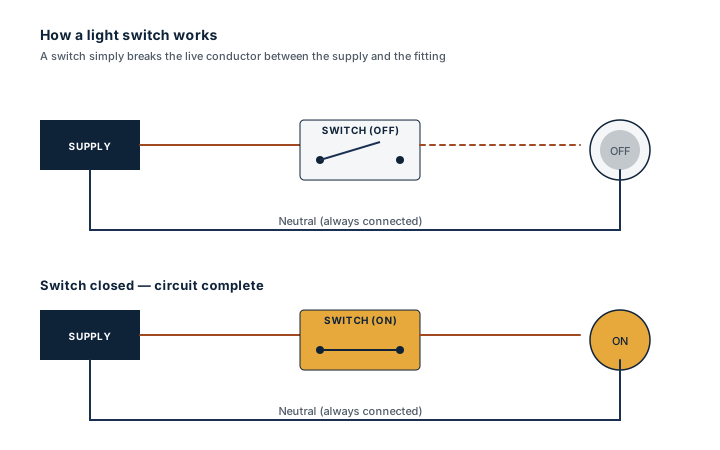
A light switch is, in mechanical terms, a small spring-loaded contact pair. In a Singapore home it gets pressed ten thousand times before the homeowner notices it exists. The choice of switch affects feel, lifetime and what circuits can be added later.
The five working types
- 1-way — one switch, one fitting. The default for a single ceiling light.
- 2-way — two switches controlling the same fitting (e.g. top and bottom of a staircase).
- Intermediate — three or more switches on the same fitting (long corridor, large room).
- Dimmer — variable output for incandescent / dim-rated LED lighting. Match dimmer to lamp type.
- Smart switch — wireless control, often with no neutral required at the wall (or sometimes required, check the spec).
What to specify on the order
- Rating — 10 A for lights is universal; 16 A or higher only where a switch controls a high-current circuit (e.g. heater isolator)
- Polarity — single-pole switches only break the live conductor; double-pole switches break both. DP for water heaters and high-current isolators.
- Module finish — flush plate, raised plate, brushed steel, matt black; match throughout the unit
- Brand — Schneider, Legrand, ABB, Hager and similar tiers are the working standard
- Smart compatibility — if smart switches are planned, the back-box depth and the neutral availability decide what works
Common installation problems
A switch that sparks audibly inside the wall when toggled is a loose terminal. A switch that runs warm is a loose terminal. A switch that "feels wrong" — sticky, slow, no click — is at end of life. None of these are stand-alone defects; all of them are signs the box behind the switch needs attention.
Switches are accessories — but the cable behind them is wiring
Replacing a like-for-like switch is a homeowner-grade job. Adding a 2-way to a previously 1-way circuit, or switching from a no-neutral to neutral-required smart switch, is a wiring change — that is licensed work.