Licensed Electrical Worker in Singapore: When You Legally Need One
Not every electrical job needs an LEW, but new wiring, rewiring, extensions and DB modifications do. What the EMA framework actually requires — and what falls outside it.
Contractor-side technical notes on licensing, diagnosis, installation and the standards we work to. Written for the people who buy the scope, not for other contractors. 31 articles covering residential, commercial, industrial, lighting and event electrical works in Singapore.

Not every electrical job needs an LEW, but new wiring, rewiring, extensions and DB modifications do. What the EMA framework actually requires — and what falls outside it.
"EMA-licensed" is a category, not a single licence. Which class actually fits your scope, and how to check the worker named on your quote.
The lowest quote rarely finishes the cheapest. Six questions that separate a contractor who diagnoses and tests from one who only swaps parts.
Three planning steps before you take quotes — define the scope, fit the timeline to access windows, then take three comparable quotes against the same paper.

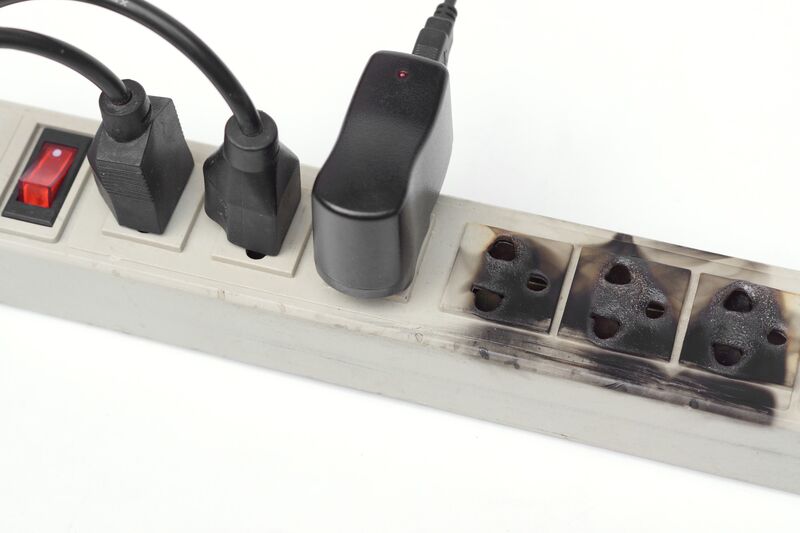
A working circuit is not the same as a safe circuit. The faults DIY work creates often surface months later — at the next trip, at the next inspection, at the next insurance claim.
Routine checks the homeowner can do without tools, and the ones that need an electrician. Where the line sits.
A crawling child can reach every socket below 600 mm. Three layers of defence — shuttered sockets, covers, and 30 mA RCD protection — close most of the risk.
The wiring mistakes that show up most often on second-opinion call-outs — and how each one shortens the life of the installation.
A blackout is mostly a calm event if you can tell whether it is your unit, your block or the area. Five quick checks separate one cause from another.
A tripping breaker is a symptom. How a contractor isolates the actual fault — earth leakage, overload, short circuit or appliance — before quoting a rewire.
A breaker trip is a designed safety event, not a fault of the breaker. Understanding the four trip modes makes prevention straightforward.
Wiring rarely fails suddenly. It signals first. Six early warnings worth treating as a diagnosis call, not a repair call.
A practical line between owner-side checks and licensed work. Where the line is, and what each side of it costs in time and risk.
Six common lighting faults, what each one points at, and the test that confirms it before any accessory is replaced.

Old DBs are a quiet risk in older HDB and condo units. When a DB upgrade is the right call — and what it actually involves on a one-day swap.
Open the DB door and the inside makes sense once you can name the parts. Incoming, isolator, residual protection, sub-circuit breakers, earth bar.
Not all "electrical cable" is the same. Five working categories and where each one fits in a Singapore home or building.
Why Singapore uses BS 1363 13 A sockets, the four faults that account for most "socket stopped working" calls, and the right way to specify a replacement.
Five switch types cover most Singapore homes. What each one does, when to use it, and what to specify on the order.
Replacing a fitting is small work. Installing a new fitting on a circuit that was never there is bigger work. Where the line sits.
Choosing a ceiling fan is room geometry plus electrical scope. Get both right at planning and the rest of the install is straightforward.
Storage and instant water heaters are the most common appliance failure that trips an HDB main RCCB. What good practice looks like, and the bonding most installers forget.
Smart and security lighting live or die on the first-fix wiring decisions. Once the ceiling is closed, retrofits get expensive.
Court lighting is mostly geometry, not wattage. The three parameters that decide playability are lux, uniformity and glare control — set the targets first, the luminaires follow.

A commercial fit-out lives or dies on the M&E coordination. The electrical scope sets the timeline for ceiling, partition and joinery — get the sequence right.
On a fit-out, the data cable shares a tray with the power cable — but only on its own conditions. Separation, termination and point-schedule discipline.
F&B kitchen ventilation is one of the highest-load and most safety-sensitive parts of a fit-out. The electrical interlock decisions made at design protect the kitchen for years.
An LV switch room is engineering scope. What sits inside the room, how it is laid out, and the rules around access, earthing and clearance.
Event power is judged by the dismantle, not the show. How a temporary distribution is planned, energised, monitored and removed within the event window.
Standby power is layered. UPS for ride-through, generator for hours, manual switchover for the rest. Decide which load lives on which layer at design.
Electrical maintenance is not a single annual visit — it is a schedule of small checks at different cadences. Get the cadence right and the major works become rare.