A circuit breaker that trips is doing its job. The interesting question is what made it trip and how to stop the same thing happening again.
Trip mode 1 — overload (slow trip)
A 20 A MCB will tolerate 22 A or 25 A for a while, but not 30 A indefinitely. The thermal element heats up and disconnects. Overload trips show up most often on kitchens and bedrooms when a high-current appliance (induction hob, kettle, hair dryer, portable AC) is added to a circuit that was already loaded.
Trip mode 2 — short circuit (fast trip)
A short — live touching neutral, or live touching earth — draws several times the rated current. The MCB magnetic element snaps off the supply in milliseconds. Common causes: damaged flexible cords, a screw driven through hidden cable during renovation, a nail through a skirting board.
Trip mode 3 — earth leakage (RCD / RCBO)
A residual-current device watches the balance between current going out the live and current returning on the neutral. If the imbalance reaches 30 mA, the device disconnects. Earth leakage trips point at a fault path through earth — wet appliances, water heaters, freezer compressors at end of life, garden lights with water ingress.
Trip mode 4 — nuisance trip
A nuisance trip happens at the threshold — a device that leaks 25–28 mA continuously sits below the 30 mA trip until a second device adds its leakage and pushes the total over. The fix is finding the leaky appliance, not increasing the trip current.
HDB-specific prevention
- Split heavy loads (water heater, induction hob, AC) onto dedicated circuits
- Replace shared RCCB on aged DBs with per-circuit RCBOs to localise nuisance trips
- Use RCD-protected sockets in wet areas — bathroom, kitchen, balcony
- Inspect flexible cords on portable appliances every quarter — replace at first sign of cracking
- Schedule a periodic insulation test on the whole installation every 5–10 years
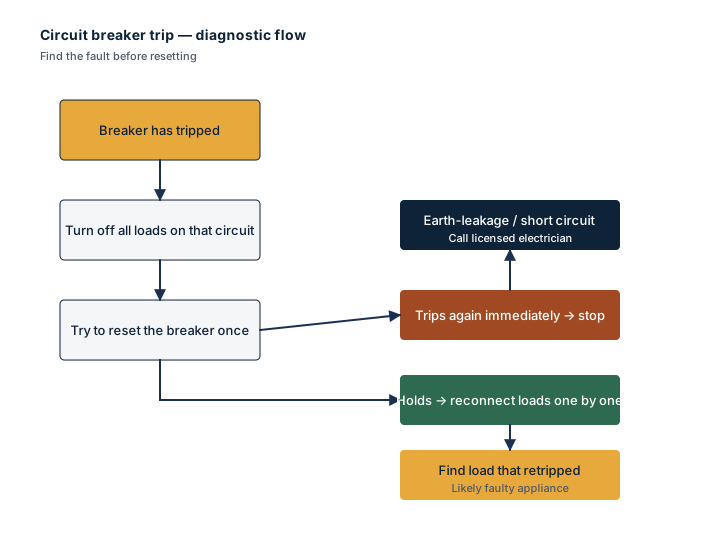
A repeated trip is a free diagnosis
The trip is the installation telling you something. The most useful thing the owner can do is note when it tripped and which device — that is half the diagnosis before the electrician arrives.