A distribution board is a small box doing a small number of jobs very seriously. The supply comes in once; the protection sits in the middle; the circuits leave the box and serve the rooms.
The six things inside
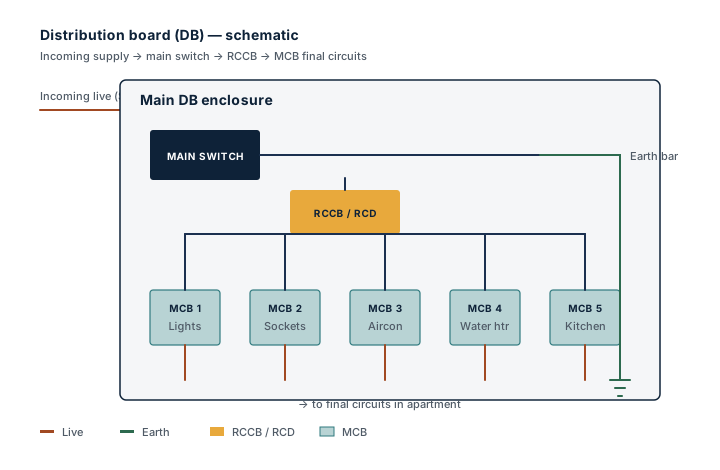
- Incoming cable — from the meter / supply licensee, sized to the unit demand
- Main isolator (DP switch) — disconnects the whole DB for service or emergency
- Residual-current device (RCCB or RCBOs) — opens on earth leakage above 30 mA
- Sub-circuit MCBs — one per circuit (lighting, sockets, kitchen, water heater, AC, etc.)
- Busbar — the live conductor distributing supply to each outgoing device
- Earth bar — terminating every circuit's protective conductor back to the main earth
How a fault travels through the DB
When an appliance shorts, current spikes. The sub-circuit MCB on the affected circuit sees the surge and trips first. The rest of the DB stays up. If the fault is earth leakage rather than a hard short, the RCD / RCBO opens instead — same outcome, different sensing mechanism. The owner experiences "one circuit went out", which is the design intent.
How the labelling helps you
When the labelling is right, the owner can isolate just one circuit during a fault — leave the freezer running, reset the bathroom heater circuit, call the electrician for diagnosis. When the labelling is wrong, the owner has to drop the whole flat each time. Five minutes of labelling at install saves hours of inconvenience over the DB's life.
The DB is not the place to economise
A DB is rated for 25 to 30 years of service. The price difference between a budget DB and a properly built one — Schneider, Hager, ABB, Legrand class enclosures and devices — is small over that lifespan. The reliability difference is not.