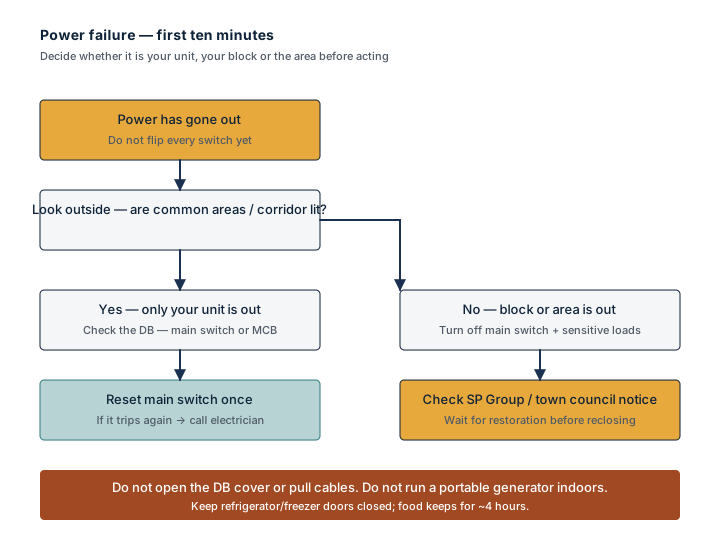
When the lights go out, the first decision is whether the problem is in your unit, in the building, or in the supply network. Each one has a different next step, and acting on the wrong assumption wastes time.
Five-second checks
- Look out the window — are the neighbours' lights on? If no, the area is out, sit tight.
- Check the corridor lights (HDB) or the common-area lights (condo) — if those are on, the issue is inside your unit.
- Open the DB door — is the main isolator off, or is a single MCB / RCBO down?
- If only one circuit is down, the rest of the unit will still work — isolate that circuit and call an electrician
- If the whole unit is dead and the rest of the building has power, the supply incomer or main isolator is the place to look
What not to do during a blackout
- Do not open the fridge / freezer repeatedly — they hold temperature for hours if left closed
- Do not light candles near curtains, paperwork or anything flammable — LED torches are safer
- Do not try to "force" an MCB closed if it has tripped — the breaker is telling you about a fault
- Do not run portable generators indoors or on balconies — carbon monoxide buildup
- Do not start touching loose-looking wires or opening accessories — wait for the electrician
When the supply comes back
After an area-wide return, expect a brief spike-and-settle. Switch off sensitive electronics (computers, audio, anything with a transformer) before restoration if you can; turn them back on a few minutes after the supply has stabilised. Inspect the freezer; if it has been off for more than four hours, treat the contents with caution.
A short blackout is a free DB audit
After a brief loss of supply, the first thing to fail will be the weakest device on the installation — a tired contactor on the AC, a marginal fluorescent ballast. If something does not come back on after the supply returns, that is the device to check, not the wiring.