In our diagnostic logbook, water heaters lead the field for "what tripped the RCCB" calls. A 240 V heating element submerged in mains water, an aged seal and a small bathroom is exactly what residual-current devices were designed to catch. Good installation makes the trip rare; bad installation guarantees it eventually.
Minimum kit per heater
- Dedicated radial circuit from the DB on its own MCB or RCBO
- Cable sized to the heater rating (typically 2.5 mm² or 4 mm²; instant heaters above 6 kW often need 6 mm²)
- Bathroom-rated double-pole isolator outside the bathroom (or inside in a compliant IP-rated enclosure)
- RCD / RCBO protection — 30 mA trip is the standard for personal protection
- Equipotential bonding between the heater body, the metallic water pipe and the protective earth
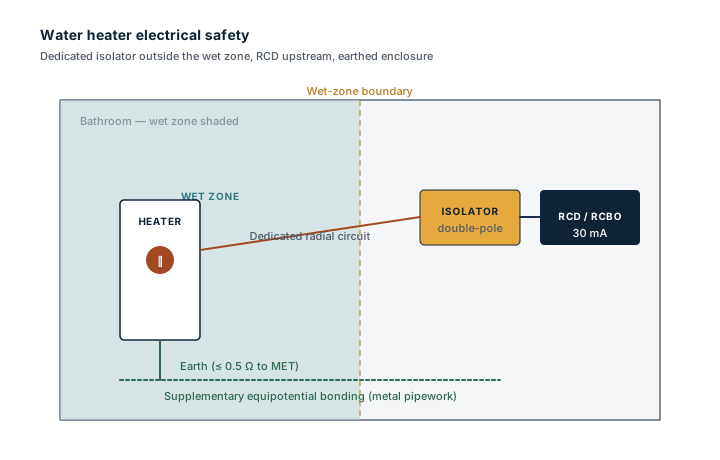
The bonding most installers forget
Equipotential bonding equalises the earth potential between the metallic parts you can touch. If the cold water pipe is metallic, the heater body, the shower head bracket and the pipe should be at the same potential as protective earth. Missed bonding is invisible during commissioning but turns a small fault into an "I felt a shock from the shower" complaint two years later.
Replacement vs new install — different scope
Like-for-like replacement of an existing storage heater on a working dedicated circuit is a short job — drain, dismount, mount, reconnect, leak test. A new installation, or upsizing from a 3 kW to a 6 kW unit, is an "extension of an electrical installation" — licensed work under the Energy Market Authority framework, including new cable, new isolator and protective device sizing.
Test the trip before walking off
After install we press the RCD test button at the DB and verify the heater circuit drops out. Tested. Logged. Closed.