A ceiling fan installation has two halves — the mechanical (where it hangs from, how it is balanced) and the electrical (its own isolator, the wall switch, the remote receiver). Plan both at the same time.
Sizing the fan to the room
- Up to 9 m² — 36" / 42" fan
- 9–14 m² — 44" / 48" fan
- 14–18 m² — 52" / 56" fan
- 18 m² and above — 60"+ or a second fan
Ceiling height and clearance
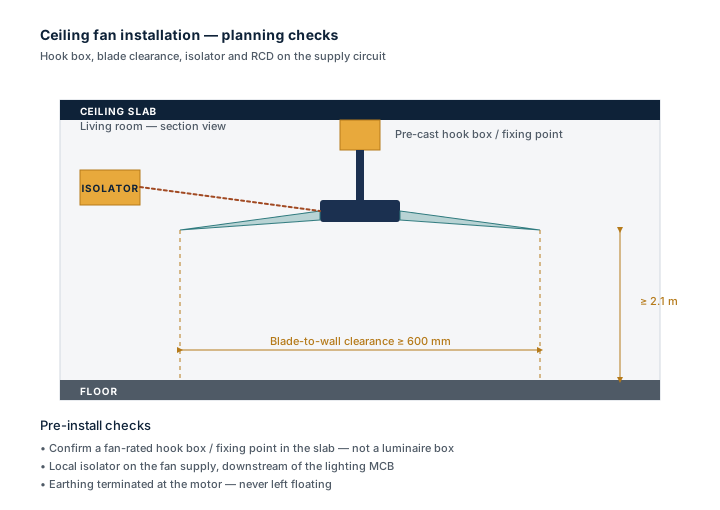
- Minimum blade-to-floor clearance — 2.3 m for comfort, 2.1 m as the absolute floor for compliance
- Standard HDB ceiling at 2.6 m — comfortable with most fans on a short drop or direct mount
- High ceilings (3 m+) — use a downrod to bring the blade plane down to comfort height
- Sloped ceilings — angled mount kit required, plus a fan rated for the slope angle
Electrical scope
- Dedicated isolator above the fan (concealed in the ceiling void or boxed)
- Wall switch — separate from any light switch on the same point if both light and fan are integrated
- Remote receiver — sits in the ceiling void; access hatch or removable plate for future swap
- Smart fan integration — Wi-Fi or RF receiver wired to a permanent live, with the wall switch left "on"
Mounting on concrete vs false ceiling
On a concrete slab the fan hangs off a metal hook or anchor rated for the dynamic load (the fan plus its imbalance under operation). On a false ceiling the fan must hang from the concrete above the false ceiling — never from the false ceiling itself. A reinforced trim or a steel cross-piece spanning above the false ceiling carries the load.
The fan is not the light
A fan with an integrated light has two circuits internally. Make sure the switching plan separates them — otherwise the household has to run the fan to use the light or vice versa.