CCTV / IP camera, structured data, intercom, auto-gate and security sensor cabling sit alongside the electrical sub-trade on most Singapore commercial fit-outs. Done in sequence and with the right separation, they share trunking and tray without interference. Done out of sequence, they create rework and noise problems that no amount of patch panel labelling fixes later.
Cable separation and routing
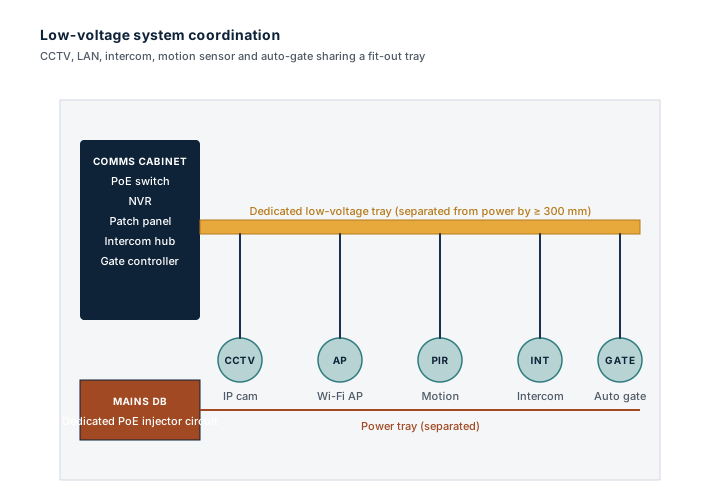
Standard practice in Singapore commercial fit-outs is a minimum 200 mm separation between LV power cables and Cat6 / Cat6A data cables run in parallel. Where they must cross, they cross at 90°. PoE-powered IP cameras run on the same Cat6/6A cable as the data, so the separation rule still applies even though there is no separate power feed at the camera end.
Termination discipline
- Untwist no more than 13 mm at any RJ45 termination to preserve pair geometry
- Use the same termination scheme (T568A or T568B) at every patch panel and outlet — pick one, label one
- Test every run with a certifier and keep the test report — that is what the IT vendor will ask for at handover
- Camera-end coil 1 m of slack into the ceiling for future re-aim without re-pulling cable
- Label every cable both ends with a unique ID matching the point schedule
Intercom and auto-gate / auto-barrier
- Door / gate intercom — RS-485 or IP, with a small 12 V or 24 V DC power feed at the panel, not at every station
- Auto-gate motors — induction loops in the driveway floor, photoelectric beams across the gate opening
- Auto-barrier — separate emergency-stop loop, hardwired, independent of the main control logic
- Coordinate the access control system's controller location — needs network, power and UPS, usually in the IT room
Smoke / CO / motion sensors
On commercial fit-outs, smoke and CO detection are typically tied to the building fire panel — not standalone units. Coordinate with the fire-protection contractor on detector positions before ceiling closure. Motion sensors for after-hours lighting are simpler — they hang off the lighting circuit and trigger zones based on zoning at the lighting controller.
CCTV commissioning
CCTV / IP camera commissioning means proving every camera streams to the recorder (NVR or VMS), motion detection zones are tuned, masking is set where privacy is required, and remote viewing works on the agreed device. The contractor leaves a printed camera map labelled with each device ID and IP address.
Point schedule = future proofing
The point schedule is the document the next contractor on site will use. Spending an hour at handover to finalise it saves a day of guesswork in twelve months when someone wants to add a camera or a workstation.