Lighting changes look like decorating decisions. They are partly that and partly an electrical decision — about the circuit, the support, and the room's actual lux level.
Like-for-like replacement
Same ceiling rose, same hook, same circuit, same fitting class — this is small work. Take the existing fitting down, take the new one up, test on, done. The owner can do this on a dead circuit, though a clear isolation at the DB is the right safety step.
Where it becomes bigger work
- Adding a new ceiling fitting where there was only a wall fitting
- Splitting one ceiling circuit into two (e.g. lounge / dining separation)
- Installing track lighting on a long run that requires a dedicated circuit
- Heavy fittings (chandeliers, large pendants) requiring proper ceiling support
- LED panel fittings that require an isolator behind the ceiling and a planned access hatch
Choosing for the room
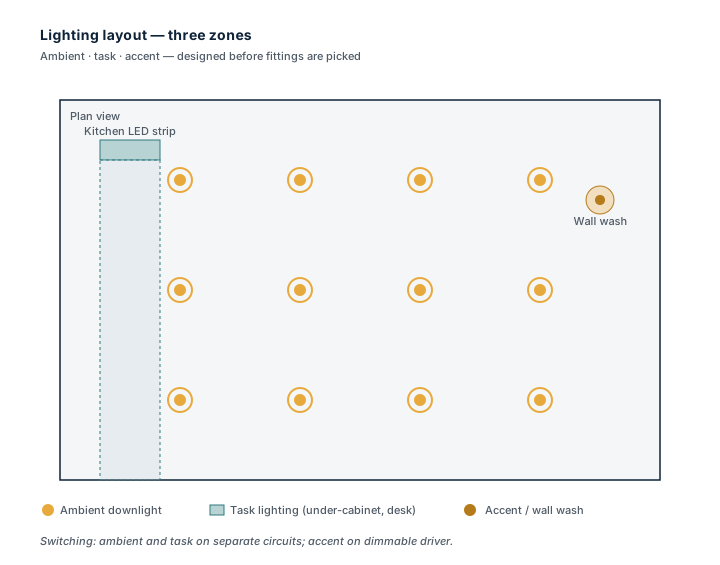
- Living room — three lux layers: ambient (general ceiling), task (sofa reading), accent (artwork or shelves)
- Kitchen — task light under the upper cabinets, plus ceiling lighting; never just one downlight over the centre
- Bedroom — warm-white temperature (2700–3000 K), dimmable if possible
- Bathroom — IP-rated for splash zones, RCD on the supply circuit
- Study — neutral-white (4000 K) at the work surface; dimming for evening relaxation
False ceiling notes
Concealed downlights in a false ceiling need a proper junction box, sized cutout, and a maintenance access point. A downlight installed without access is a maintenance trap for the next owner. Plan the access hatch at the same time as the layout.
Lighting is the cheapest renovation upgrade
Of all the things a renovation can change, lighting has the largest visual return per dollar. A right-spec lighting plan turns a budget-build unit into a high-end one without any other change.